
MANË RESOURCES Scalp & skin knowledge
Microbiome Imbalance / Malassezia Overgrowth
A normal yeast can be involved in specific skin concerns.

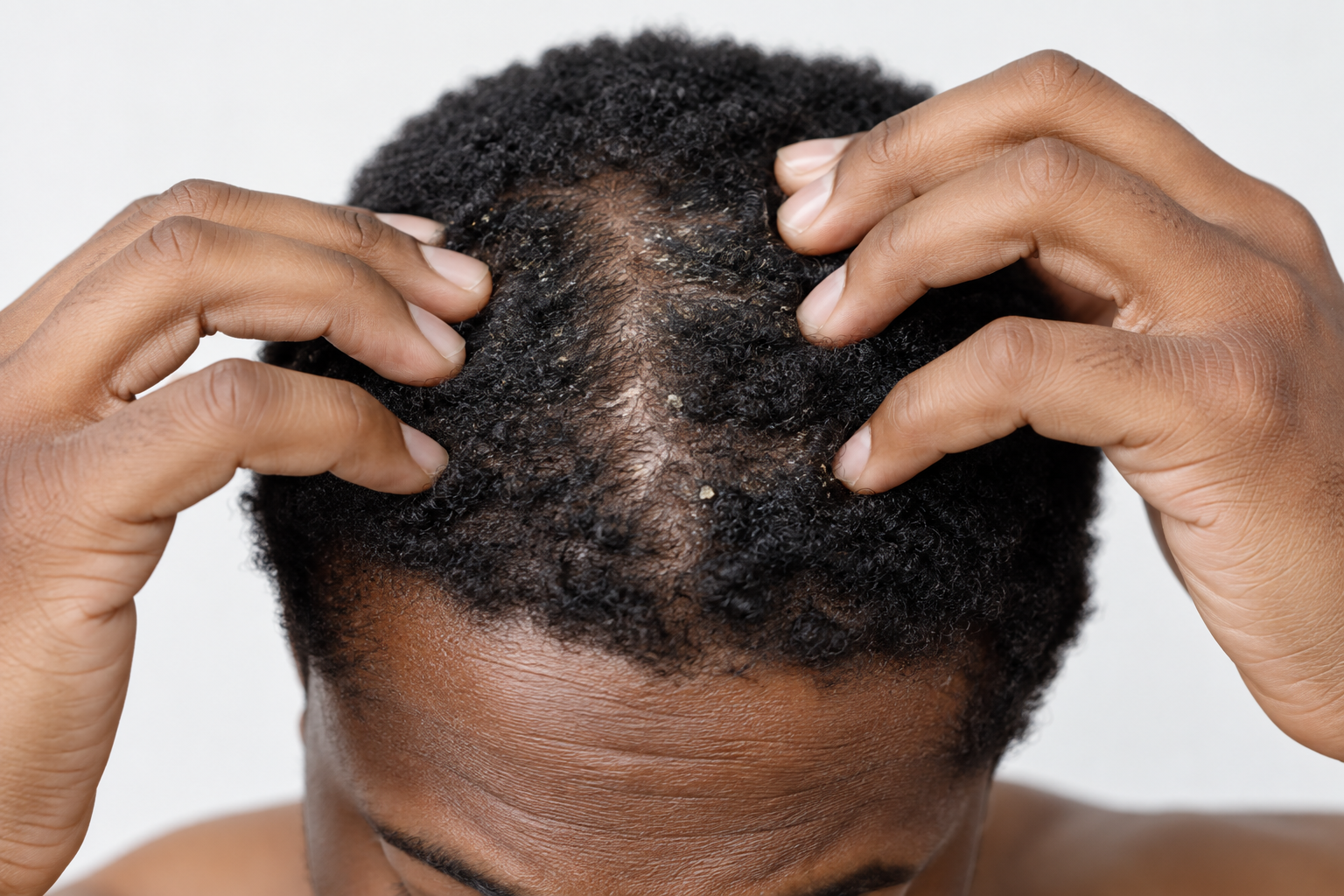
01 Understand the term
Malassezia yeasts normally live on skin and can contribute to seborrheic dermatitis and Malassezia folliculitis. These conditions need different care. If flakes or bumps keep returning, seek help identifying the cause before choosing a treatment. 1, 2
Relevant factors 1, 2
- Seborrheic dermatitis: scaly, inflamed oily areas
- Malassezia folliculitis: similar-looking itchy follicular bumps
- Heat, sweating and occlusion may favor folliculitis
02 Three care priorities
1
2
03 Care considerations
Antifungal medicines
Ketoconazole is one option used for relevant yeast-associated conditions. 1, 2
A cosmetic scalp oil is not an equivalent treatment.
Barrier support
A tolerated moisturizer may support dry, irritated skin. 5
Moisturizing is supportive care; recurring symptoms may need treatment.
Occlusion awareness
Heavy occlusion can be a factor in Malassezia folliculitis. 2
Discuss recurring bumps rather than labeling all oils harmful.