
Porosity
Understand moisture. Care for the cuticle.

01 What porosity means
Hair porosity describes how readily water can enter the hair fiber. Its outer cuticle and surface lipids help regulate water interactions. Damage to this protective surface can increase water uptake and leave hair more vulnerable. Think about the condition of your strands, not just a porosity label. 1
What affects the cuticle 1, 2
- Bleaching and chemical processing
- Repeated high-heat styling
- Friction and rough handling
- Accumulated environmental wear
02 Three care priorities
Condition after cleansing
Use conditioner after shampooing. Focus on the ends for fine or straight hair; condition the lengths of dry or curly hair. 2
Reduce styling stress
Limit hot tools and use low or medium heat with a heat-protectant product. Avoid rubbing hair roughly with a towel. 2
Detangle with care
Work from the ends upward with a wide-tooth comb. For thick, curly hair, detangle with conditioner before rinsing. 2
03 Care considerations
Surface protection
Conditioning agents can coat the hair surface, reduce friction and improve softness. 1
Choose for manageability, not a promised porosity cure.
Gentle cleansing
Shampoo the scalp to remove oil and buildup without unnecessarily drying the lengths. 2
Wash according to how dirty or oily your hair becomes.
Hydrolyzed proteins
Protein-based conditioning ingredients may interact with damaged hair; results depend on the formulation. 1
Ingredient research is not proof of a product's clinical results.
04 A MANË conditioning option
Optional leave-in care, not a treatment proven to change porosity.
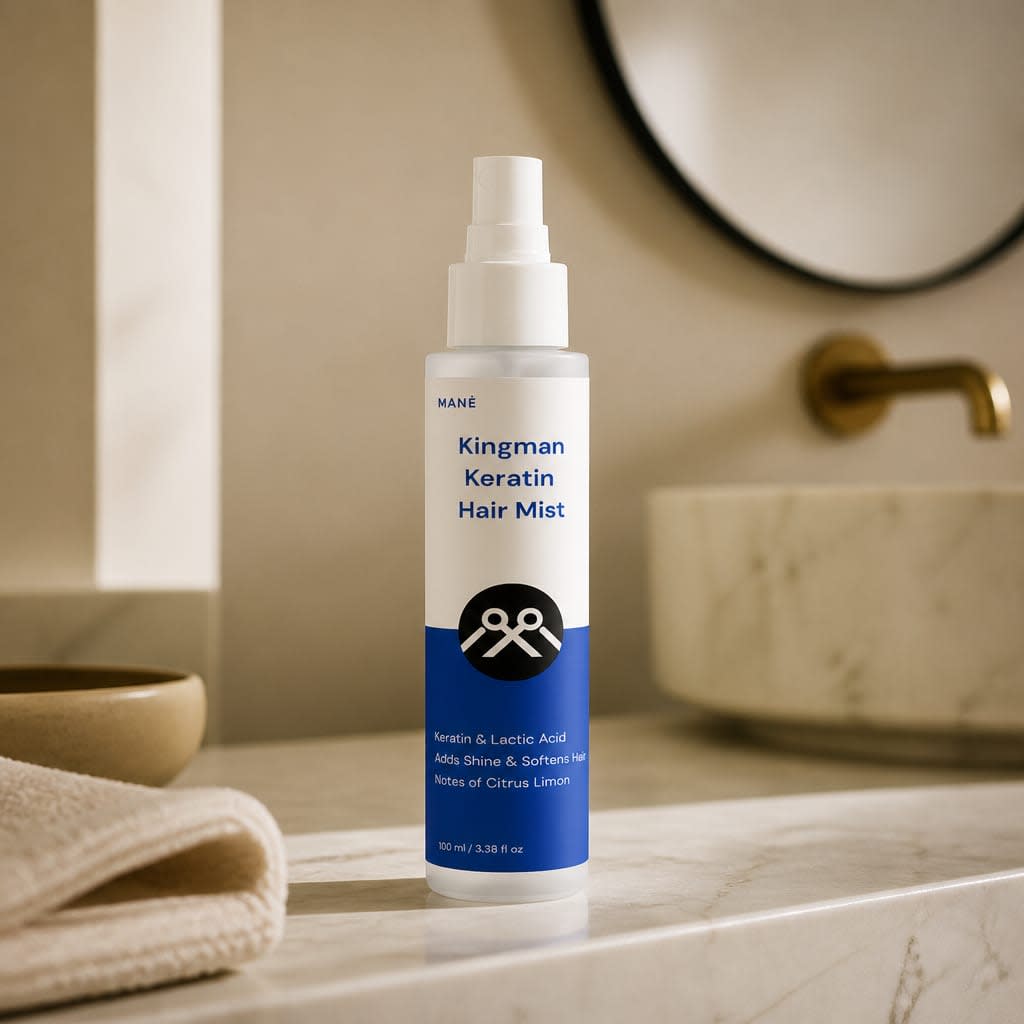
Leave-in care
Kingman Keratin Hair Mist Leave-In Spray
A leave-in mist with hydrolyzed keratin, lactic acid and algae extract. The formula also contains fragrance and essential-oil components. 3
View product