
MANË RESOURCES Skin knowledge
Transepidermal Water Loss (TEWL)
Water leaving the skin is a process, not a diagnosis.

01 Understand the term
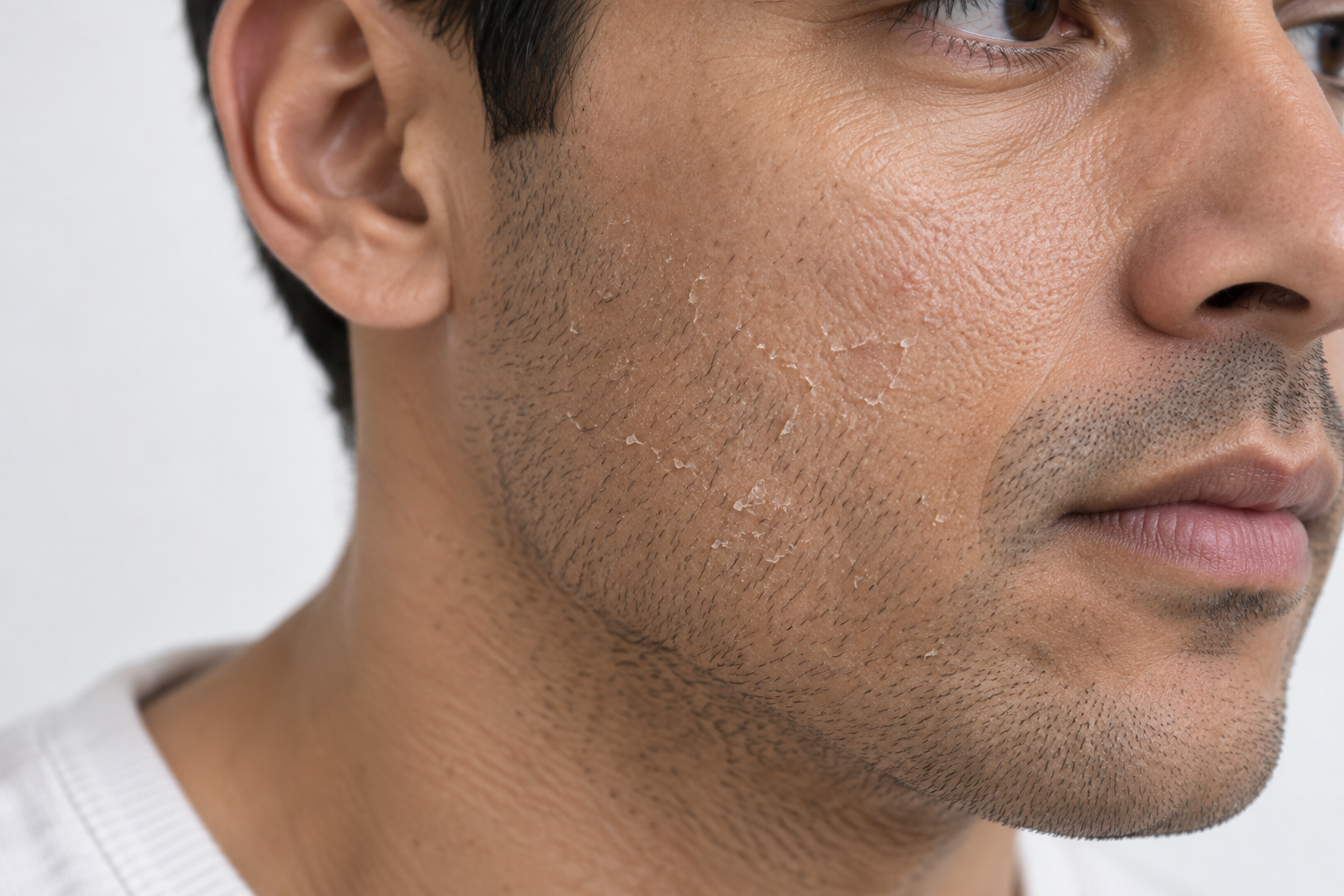
Transepidermal water loss is the movement of water from inside the body through the epidermis to the outside environment. It occurs normally. Higher TEWL can accompany an impaired barrier, but tightness or dryness alone cannot measure it. It is distinct from sweat and from how hydrated skin feels. 1
Relevant factors 1, 2, 3
- Changes in the outer skin barrier
- Irritant exposure
- Dry skin and inflammatory skin conditions
02 Three care priorities
1
2
Moisturize after washing
Apply a tolerated fragrance-free cream or ointment to damp skin to help retain moisture. 3
03 Care considerations
Humectants
Glycerin helps attract and retain water in the outer skin. 4
Finished-formula tolerance matters.
Occlusives
Petrolatum and dimethicone can reduce evaporative water loss. 4
Choose the texture and site that suit your needs.
Emollients
Help soften and smooth dry skin. 4
They support care without proving a measured TEWL change.